




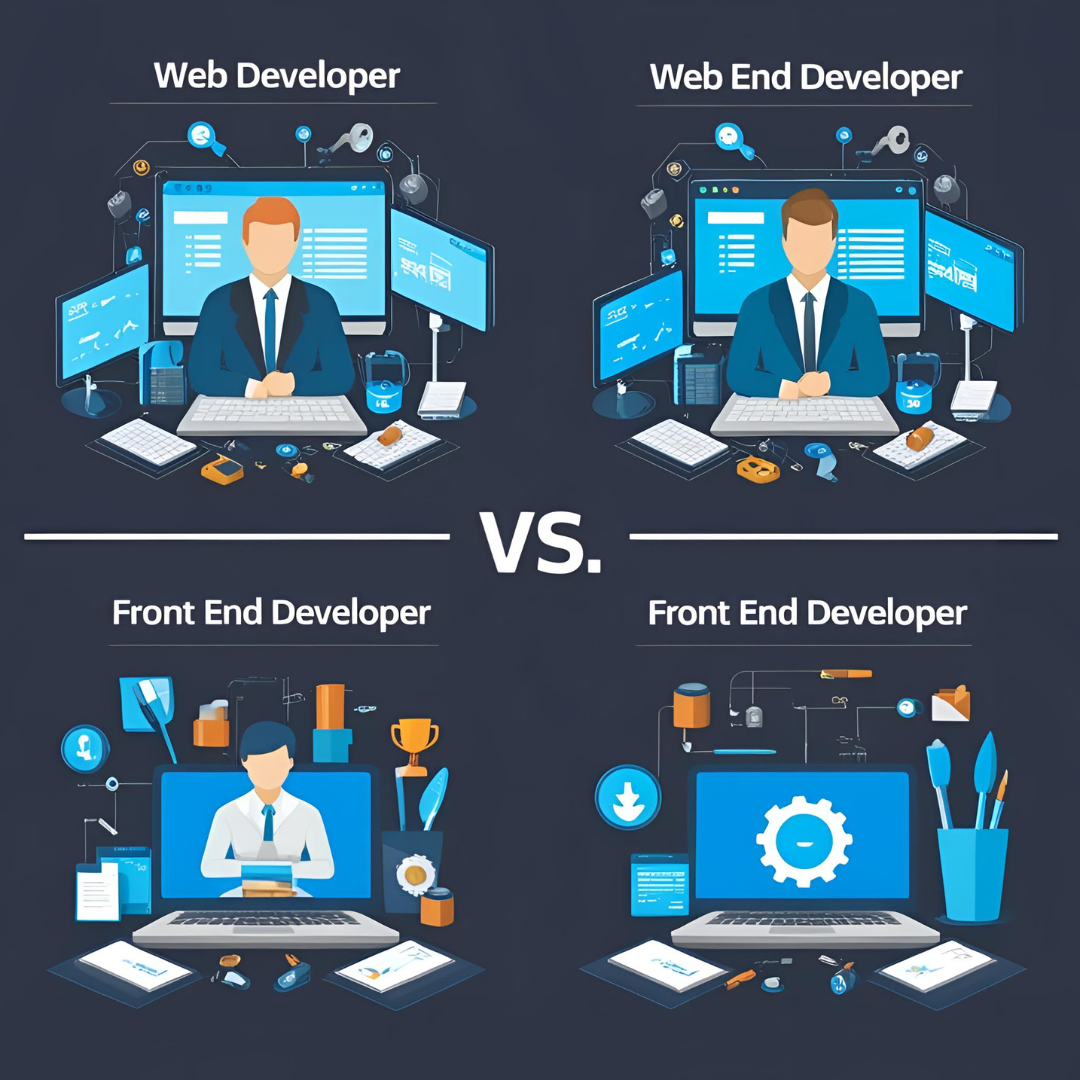
When you’re a small business owner or entrepreneur looking to establish an online presence, understanding the roles of a front end developer versus a web developer can mean the difference between a smooth project and costly misunderstandings. In the debate of front end developer vs web developer, the distinction boils down to scope: front end developers specialize in what users see and interact with, while web developers (often full‑stack) manage both the front end and the underlying server‑side architecture.
Choosing the right agency hinges on your goals—whether you need pixel‑perfect designs and seamless user interfaces, or a fully integrated solution that covers databases, APIs, and server infrastructure. In this guide, we’ll break down each role’s responsibilities, the technologies they use, common misconceptions (such as is web development front end), and help you decide which type of agency is best suited to your budget, timeline, and long‑term maintenance needs. By the end, you’ll know exactly who to hire to turn your vision into a responsive, user‑friendly, and high‑performing website.
What Is Front End Development?
Front end development focuses exclusively on the user’s experience: the visuals, interactions, and performance of a website in the browser. When someone asks, “Is web development front end?” they’re highlighting this specialization. A front end developer translates design mockups and wireframes into functional code using core technologies like HTML5, CSS3, and JavaScript, often enhanced by AJAX for dynamic content updates without full page reloads. Their work ensures that layouts adapt responsively across devices, maintain consistent browser compatibility, and prioritize user interface (UI) and user experience (UX) best practices.
Agencies offering front end development typically provide component‑based architectures with popular frameworks—think React, Vue.js, or Angular—to streamline development and future updates. They handle tasks such as implementing navigation menus, interactive forms, animated transitions, and ensuring accessibility standards are met. Because they specialize in client‑side code, you’ll benefit from optimized load times, smooth animations, and interfaces that guide users toward your call to action.
If your project requires a visually stunning storefront, a marketing landing page, or a brochure site where server logic is minimal or handled by a separate team, hiring a front end‑focused agency can be more cost‑effective. For more details on selecting the right tools, see our overview of [front end web development frameworks]. This concentrated expertise lets you achieve pixel‑perfect results without paying the premium rates associated with full‑stack development.
What Is Web (Full‑Stack) Development?
Web development goes beyond the browser to encompass both client‑side and server‑side engineering, which is why full‑stack or web developers handle everything from UI to database schemas. Unlike front end specialists, web developers manage backend technologies—such as PHP, ASP.NET, or Node.js—to build robust server logic, secure APIs, and data persistence layers. Whether it’s data parsing from user input or refactoring HTML served dynamically, these professionals ensure that your site not only looks great but also scales, processes transactions, and integrates with third‑party services.
Full‑stack agencies typically staff teams with expertise in server frameworks (Express.js for Node.js, Laravel for PHP, or the .NET ecosystem) alongside front end capabilities in HTML5, CSS3, and JavaScript libraries like jQuery. They set up database engines (MySQL, MongoDB), configure hosting environments, and optimize performance through caching or load balancing. This holistic approach means a single agency can deliver everything from the signup form’s JavaScript validation to the architecture that stores user data securely.
A common question is, “Is front end development and web development same?” While front end development zeroes in on visual components and user interactions, web development (often used interchangeably with full‑stack) covers both sides of the equation. If your business needs complex functionality—user authentication, e‑commerce shopping carts, or real‑time data feeds—hiring a web development agency ensures streamlined communication and cohesive maintenance, rather than coordinating separate front end and backend teams.
Front End Development vs Web Development: Key Agency Roles
When evaluating agencies, it’s essential to understand how front end development and web development fit into project teams. A front end developer’s role centers on crafting pixel‑perfect interfaces, ensuring responsive design, and addressing browser compatibility. They specialize in UI/UX patterns, translating wireframes into live code, and may implement animations or interactive charts. Their skill set focuses heavily on client‑side performance and accessibility standards, making them ideal for brochure sites, marketing landing pages, or SPA (single‑page application) projects.
Web developers, by contrast, play a dual role. They not only handle the front end—leveraging HTML, CSS, and JavaScript frameworks—but also build the backend systems that power your site. In agency settings, full‑stack developers bridge gaps between design and infrastructure, configuring servers, writing RESTful APIs, and managing databases. Their work ensures that forms, user registrations, and payment gateways function seamlessly, while also optimizing server‑side rendering for SEO and performance.
Choosing between the two often comes down to project scope and budget. If you need a straightforward website where content updates happen through a CMS, a dedicated front end agency will deliver high‑impact visuals at a lower cost. However, for applications requiring secure user logins, complex data workflows, or integration with business systems, a web development agency—or a team with full‑stack expertise—offers the comprehensive skill set to build, deploy, and maintain your platform end‑to‑end.
Common Questions – Agency Edition
When you’re evaluating agencies, a few FAQs often come up before you can jump to a conclusion:
Is web development front end? Not entirely. Front end development is a subset of web development focused on what users see in the browser—layouts, styles, and interactive elements—whereas web development (or full‑stack) also covers server logic, databases, and APIs.
Can a front‑end developer be a web designer? In smaller agencies, roles can overlap: a front‑end developer may craft wireframes or mockups and implement design details, effectively wearing both hats. However, pure web designers focus on visual aesthetics and user journeys, while front‑end developers translate those designs into code.
Do front end developers do SEO? They handle the technical aspects of on‑page SEO—semantic HTML5 markup, optimized CSS, JavaScript performance tweaks, and accessibility best practices—so your site loads quickly and is crawl‑friendly. For keyword strategy and content audits, you’d typically engage an SEO specialist or a digital marketing team, but solid front‑end work lays the foundation for search visibility.
By clarifying these questions up front, you’ll know whether to look for a specialist front‑end agency or a full‑stack team that bundles design, development, and SEO under one roof.
Must‑Have Skills & Frameworks in Your RFP
When drafting your RFP, be explicit about the front end web development languages and frameworks you expect:
- HTML5 & CSS3: Semantically structured HTML and modular, responsive CSS.
- JavaScript: Core language for interactivity; look for experience in ES6+ features.
- Web development frameworks: React, Vue.js, or Angular for component‑based builds; Node.js or ASP.NET on the server side if you need full‑stack support.
- Ajax & Data Parsing: For dynamic content loading without page refreshes.
- Wireframes & UI/UX: Ask how the agency incorporates wireframes into development to ensure accurate implementation of your design vision.
- Browser Compatibility & Responsive Design: Confirm testing across major browsers and devices.
- Computer Languages: If your project requires backend work, specify PHP, Python, or .NET based on your existing technology stack.
Including these must‑haves in your RFP ensures agencies bid on clear requirements, making it easier to compare proposals and select the team whose expertise aligns with your project’s goals.
How to Choose the Right Development Agency
Selecting the perfect partner for your website project can feel overwhelming, but by following a structured approach, small businesses can make informed decisions that match their goals and budget. Start by defining your project scope: do you primarily need a polished user interface, or do you require end‑to‑end solutions including server‑side logic and database management? If you’re focused on sleek animations, seamless responsive design, and pixel‑perfect layouts, consider an agency with a dedicated front end team. Look for their experience in HTML5, CSS3, and modern JavaScript libraries—ask “what front end web developer do you assign to projects like mine?” to gauge their specialization.
For more complex applications—such as e‑commerce platforms, membership sites, or real‑time data dashboards—a full‑stack or web development agency is likely the better fit. In your RFP, outline required front end web development frameworks (React, Vue.js, or Angular) alongside backend technologies like Node.js or ASP.NET. Request case studies demonstrating proficiency in wireframes, API integration, and data parsing, ensuring they can handle both client‑side and server‑side challenges.
Next, evaluate portfolios and client testimonials. Pay attention to sites that showcase excellent browser compatibility, fast load times, and clear user experience (UX) flows. Don’t hesitate to ask for references or to see live examples where the agency improved SEO via savvy front‑end optimizations—after all, do front end developers do SEO? is a valid question when performance and accessibility directly impact search rankings.
Finally, compare quotes not just on cost but on deliverables and post‑launch support. A reputable agency will outline their maintenance plans, hosting recommendations, and how they manage version control and staging environments. Clarity on timelines and communication channels is crucial for staying on schedule and under budget.
Ready to launch your dream website? Partner with Penta Tech Solutions today, and let our expert front end and full‑stack teams craft a high‑performing, user‑centric site tailored to your business needs. Contact us now to get a customized proposal and start turning your vision into reality!